


Call us now
08071931350

 Send Inquiry
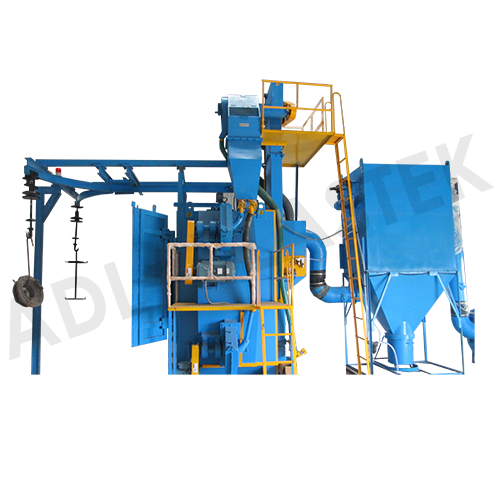
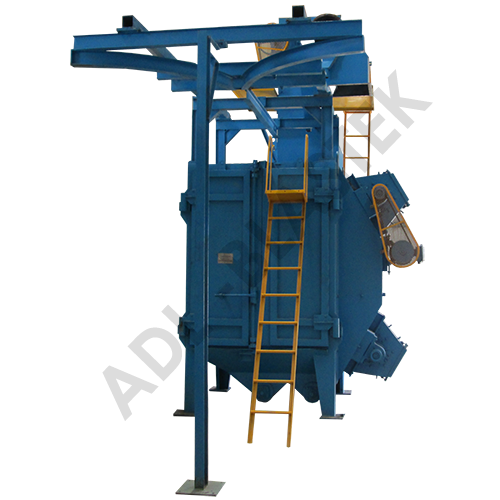
Y-Conveyor Hanger Shot Blasting Machine
Price 3000000.0 INR/ Number
Y-Conveyor Hanger Shot Blasting Machine Specification
- Noise Level
- 85 db
- Control System
- Semi-Automatic
- Model No
- ADL-BT-SPH
- Machine Type
- Airless
- Voltage
- 415 Volt (v)
- Accuracy
- 99 %
- Motor Power
- 49 Horsepower (HP)
- Country Of Origin
- India
- Product Type
- Other
- Technology
- Other
- Power Source
- Electricity
- Operating Type
- Automatic
- Power
- 420 Volt (v)
- Pressure
- 6-7 Bar
- Surface Treatment
- Painted
- Dimension (L*W*H)
- 365x680x500 Centimeter (cm)
- Weight (kg)
- 4 Tonne
- Color
- Dark Blue
- Warranty
- 1 year
- Usage & Applications
- Casting, Forging, Sheet Metal
Y-Conveyor Hanger Shot Blasting Machine Trade Information
- Minimum Order Quantity
- 1 Number, Number, Number
- FOB Port
- Mundra
- Payment Terms
- Letter of Credit (L/C), Cash Advance (CA), Cash in Advance (CID), Cheque
- Supply Ability
- 1 Number, Number, Number Per Month
- Delivery Time
- 6 Week
- Sample Policy
- Contact us for information regarding our sample policy
- Packaging Details
- Packaging charges will be charged on Ex. Works Price as detailed in our quotation. Only critical items will be Wooden Packed & rest of items will be Polyurethane bubble packed for protection.
- Main Export Market(s)
- Middle East, Africa, Central America, North America, Asia, Australia, South America, Eastern Europe, Western Europe
- Main Domestic Market
- All India
- Certifications
- ISO 9001:2015 ISO 14001:2015 ISO 45001:2015
About Y-Conveyor Hanger Shot Blasting Machine
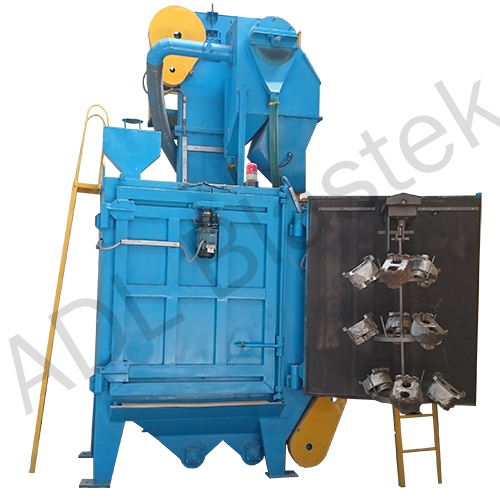
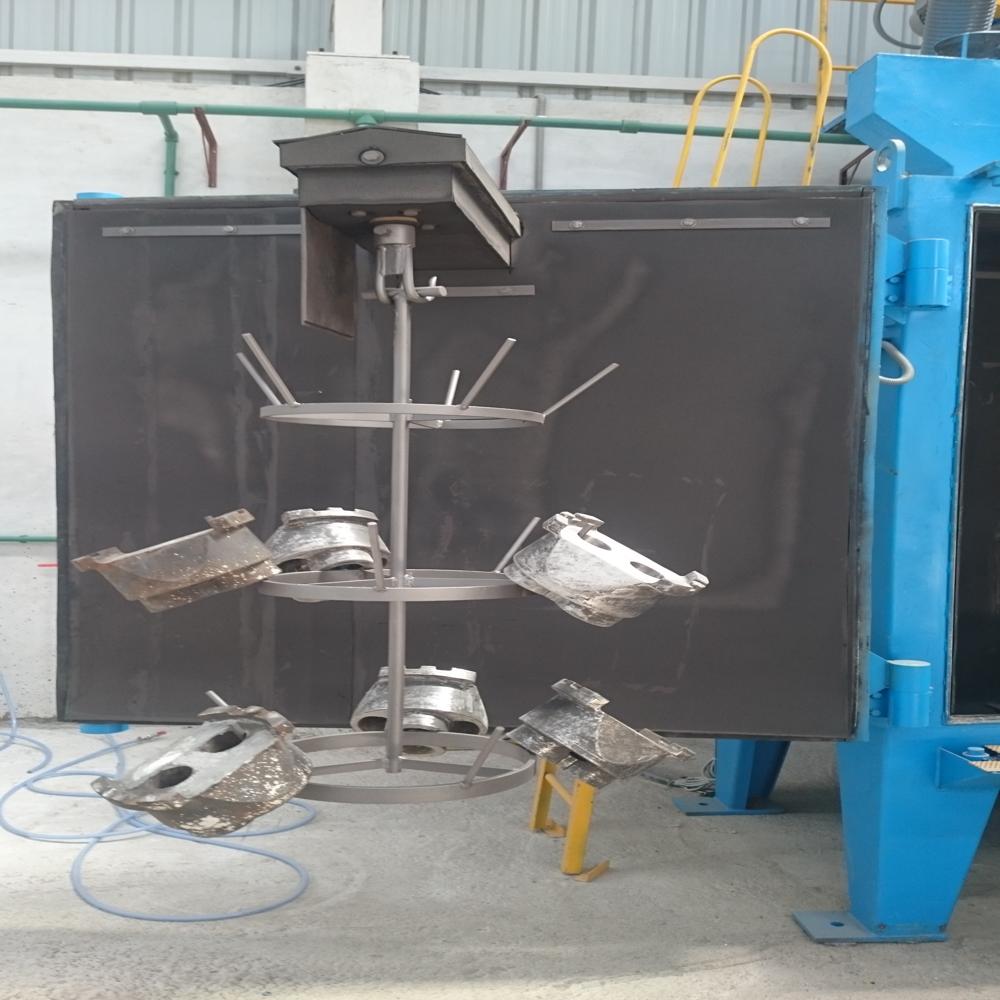
Hanger type Machine consists of horizontal door with a rotating hanger type work/job handlingsystem. This hanger is directly mounted on the door of the machine and itrotates on its own axis, drive unit of this hanger is provided outside thedoor. This hanger swings out as the door is opened, making the full area easilyapproachable for loading and unloading of the components. For loading the components,door of the machine is opened manually & components to be blasted arehanged one by one on to the door hanger and the door of the machine is closed.
Efficient Surface Treatment
Engineered for the rapid and thorough cleaning of metal parts, the Y-Conveyor Hanger Shot Blasting Machine ensures that surfaces are prepared for further processing or finishing. Its automatic operation streamlines workflows, making it ideal for industries dealing with casting, forging, and sheet metal fabrication.
Advanced Automation and Power
With a robust 420 Volt electric power supply and automatic controls, this machine simplifies the shot blasting process. The reliable pressure system between 6-7 Bar facilitates consistent cleaning, while the dark blue painted exterior protects the machine and maintains its professional appearance.
Versatile Industry Applications
The Y-Conveyor Hanger Shot Blasting Machine is versatile, supporting applications in casting, forging, and sheet metal sectors. Its adaptable design makes it suitable for various production needs, ensuring quality surface preparation for a range of industrial components.
FAQs of Y-Conveyor Hanger Shot Blasting Machine:
Q: How does the Y-Conveyor Hanger Shot Blasting Machine operate?
A: The machine operates automatically by using a hanger conveyor system to transport parts through the blasting chamber, where abrasive media is propelled under controlled pressure (6-7 Bar) for thorough cleaning and surface treatment.Q: What is the primary usage and application of this shot blasting machine?
A: This equipment is mainly used for surface cleaning and finishing of casting, forging, and sheet metal components in manufacturing and fabrication industries, improving their quality and preparing them for further processing.Q: When is it recommended to use the Y-Conveyor Hanger Shot Blasting Machine?
A: It is recommended during production or maintenance cycles whenever high-quality surface treatment is required prior to painting, coating, or assembly of metal parts in industrial settings.Q: Where can the Y-Conveyor Hanger Shot Blasting Machine be installed?
A: The machine is suitable for installation in manufacturing plants, fabrication workshops, and industrial units engaged with casting, forging, and sheet metal processing, primarily in India or for export worldwide.Q: What process does the machine use to treat surfaces?
A: It utilizes shot blasting, where abrasive particles are blasted against the surface of components to remove scale, rust, and contaminants, resulting in a smooth and clean finish.Q: What benefits does this machine provide over manual surface cleaning methods?
A: It offers improved efficiency, uniform cleaning, reduced labor efforts, and consistent quality, helping companies to meet stringent production standards while lowering operational costs.Q: Is there any special requirement for operating this machine?
A: A stable electricity supply of 420 Volt and air pressure between 6-7 Bar are essential for optimal performance. Operators should also follow safety guidelines during use.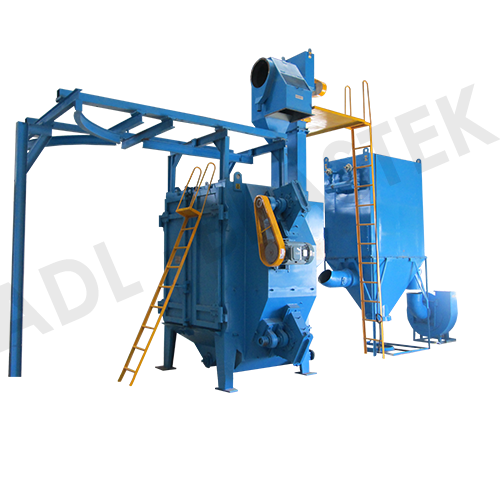


Price:
- 50
- 100
- 200
- 250
- 500
- 1000+

More Products in Hanger Shot Blasting Machine Category
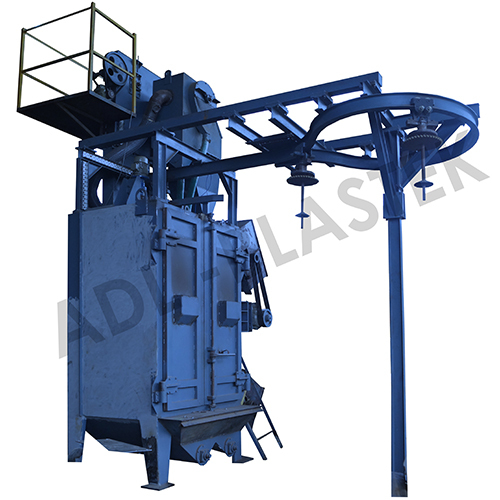
O Loop Hanger Shot Blasting Machine
Price 1200000.0 INR / Kilowatt
Minimum Order Quantity : 1 Kilowatt
Product Type : Other
Machine Type : AIRLESS
Voltage : 415 Volt (v)
Noise Level : 85 db
Door Hanger Shot Blasting Machine
Price 600000.0 INR / Number
Minimum Order Quantity : 1 Number
Product Type : Other
Machine Type : Airless/Electric driven
Voltage : 415 Volt (v)
Noise Level : 85 db
hook type shot blasting machine
Price 1500000.0 INR / Number
Minimum Order Quantity : 1 Number
Product Type : Other
Machine Type : Airless
Voltage : 415 Volt (v)
Noise Level : 85 db
ADL Hanger Shot Blasting Machine
Price 1500000.0 INR / Piece
Minimum Order Quantity : 2
Product Type : Other
Machine Type : AIRLESS
Voltage : 415 Volt (v)
Noise Level : 85 db

Jodhpur, India

 Send Inquiry
 Send SMS
Developed and Managed by Infocom Network Private Limited.

